
Within the framework of the symposium, compelling presentations were delivered by heads and staff members of UNESCO Chairs, as well as by practicing educators from the UNESCO Associated Schools Network (ASPnet) in the Russian Federation. Participants shared successful experiences of integrating digital technologies into the educational process, emphasizing the challenges involved in ensuring the safe, meaningful, and creative use of digital tools to support children’s learning and development.
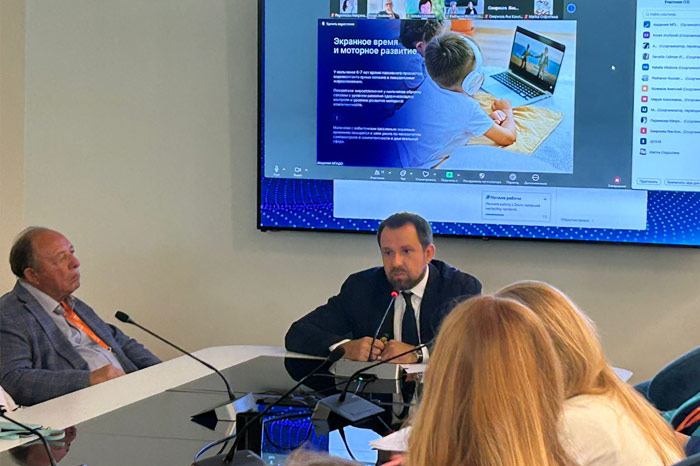
The symposium was opened by its moderator, Alexander N. Veraksa, Head of the Department of Educational Psychology and Pedagogy at the Faculty of Psychology, Lomonosov Moscow State University; Deputy Director and Head of the Laboratory of Childhood Psychology and Digital Socialization at the Psychological Institute of the Russian Academy of Education ; laureate of the Russian President's Prize in Science and Innovation for Young Scientists; Doctor of Psychology; Academician of the Russian Academy of Education. Alexander Veraksa welcomed the participants, highlighting the significance of convening at the Lomonosov Moscow Innovation Cluster on Vorobyovy Gory. He expressed particular delight that colleagues from various countries were able to join the event online.
«Today, we anticipate a rich and intensive session devoted to digitalization. We will hear about the outcomes achieved by UNESCO Chairs both within our country and internationally. In addition, we will learn about the most critical opportunities for collaboration, which constitute the principal objective of establishing the UNESCO Chairs network», — emphasized Alexander Veraksa.
Alexander Veraksa expressed gratitude to the universities and research institutes that joined the «RASTEМ VMESTE», (GROWING UP TOGETHER) research project, initiated by Lomonosov Moscow State University in collaboration with the UNESCO Chair on Early Childhood Education and Development at the International Pedagogical Academy of Preschool Education (IPAPE), to investigate, «how digitalization, which now objectively comes to a child even before birth — affects their development, and what we, as educators, psychologists, linguists, anthropologists, and specialists in other fields, must do to ensure the child’s harmonious development».
Then Alexander Veraksa presented research data indicating that, on average, children now spend the equivalent of one full day per week interacting with digital devices — a reality that, he noted, inevitably exerts a negative influence on the development of higher mental functions, physical development, speech development, and more.
Alexander Veraksa then yielded the floor to Nikolay E. Veraksa, Head of the UNESCO Chair on Early Childhood Education and Development at IAPPE, Doctor of Psychology, Professor. Nikolay Veraksa congratulated all participants on the opportunity to engage in such a crucial discussion. He underscored the vital importance of examining the impact of digitalization on early childhood education, stressing that one of the key challenges lies in the evolving role of play in children’s lives. Modern gadgets enable children to interact with screens from an extremely young age, thereby calling into question the traditional understanding of play as the leading activity of early childhood.
Nikolay Veraksa further pointed to the necessity of re-examining the cultural-historical theory in light of digital play and its influence on children’s thinking. He emphasized that digitalization presents a range of fundamental developmental challenges for children: «In this context, our Chair sees its mission as understanding how the cultural-historical theory can be modified to account for the phenomenon of digitalization, which the early childhood education system is now confronting».
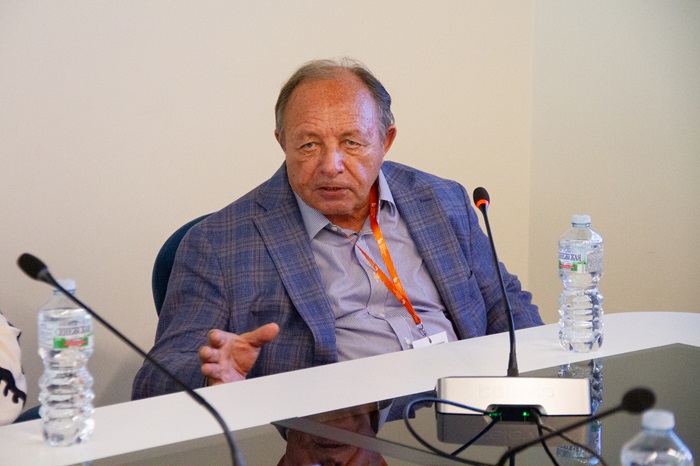
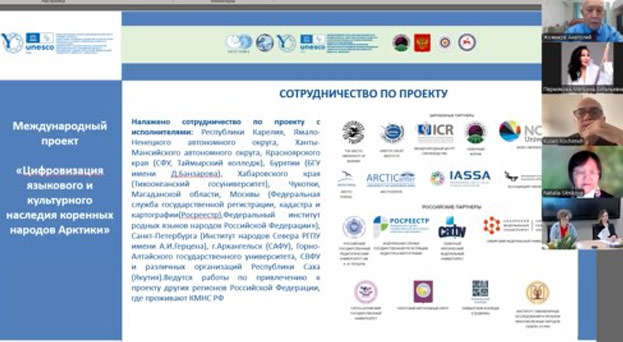
Next, Anatoly V. Zhozhikov, Doctor of Pedagogy and Head of the UNESCO Chair “Human and Societal Adaptation in Arctic Regions under Conditions of Climate Change and Globalization” at M.K. Ammosov North-Eastern Federal University (Yakutsk, Republic of Sakha (Yakutia)), together with Natalia V. Sitnikova, Director of the Branch of Federal Institute of Native Languages of the Peoples of the Russian Federation in Yakutsk, and José Antonio Flores Farfán, PhD, Professor and Researcher in Anthropology and Linguistics at the Center for Research and Higher Studies in Social Anthropology (CIESAS), Coordinator of the Victor Franco Indigenous Languages Digital Lab in Mexico City, Institute Linguapax, and UNESCO Consultant for Latin America, presented a joint international project aimed at revitalizing endangered indigenous languages of the Republic of Sakha (Yakutia). The project involves the creation of multimedia storybooks containing riddles, proverbs, and sayings in native languages. The uniqueness of this approach lies in the fact that the animated books were designed by the children themselves, thereby fostering their active involvement in preserving and promoting their ethnic languages. According to the presenters, this method not only helps children develop native language proficiency but also creates opportunities for engaging with cultural heritage through extracurricular activities.
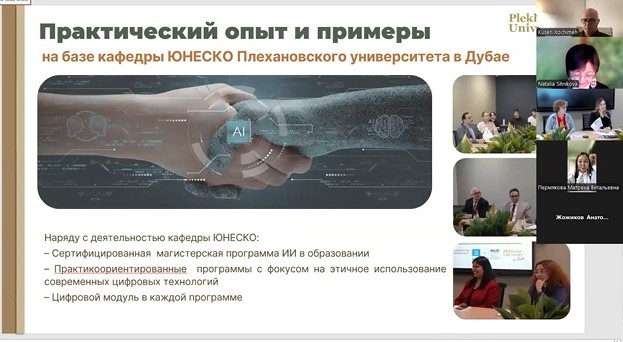
The following speaker, Maria V. Zarudnaya, Deputy Director for Academic Affairs at the G.V. Plekhanov Russian University of Economics and specialist at the UNESCO Chair «Socio-Legal and Ethical Foundations of the Knowledge Society (Information Society)», highlighted the importance of fostering digital skills and literacy in children at early developmental stages: «Although the university primarily works with adult students, the topic of early childhood education and the development of digital citizenship remains critically important». Her report focused on the fact that universities receive students who have already been educated in schools and preschool institutions. When children already possess basic technology and internet-use skills, the educators’ task becomes significantly easier. However, the speaker observed a noticeable gap between students’ technical competencies and their ability to use digital technologies effectively and safely. Often, students arrive with underdeveloped critical thinking skills and insufficiently mature online behavior. In conclusion, Maria Zarudnaya expressed hope for collaboration with the community of specialists working on digital literacy in early childhood and for the joint creation of a safe educational environment. She emphasized the significance of collaborative efforts to research and develop effective programs that help children acquire the competencies essential for a successful future.
The next presentation, titled «Specific Features of Perception of Sign Language and Dactylology by Children with Hearing Impairments in the Learning Process: An Eye-Tracking Study», was delivered by Yana K. Smirnova, Associate Professor at the Department of General and Applied Psychology, Altai State University, and specialist at the UNESCO Chair «Innovative Education in the Euro-Asian Region». Yana Smirnova shared findings from research on teaching children with hearing impairments. In her report, she stressed the importance of employing diverse instructional tools, which can profoundly influence the process of perception and acquisition of information by children with these specific needs, citing evidence of the effective application of sign language and finger spelling (dactylology). Yana Smirnova emphasized that these communication modalities are not merely substitutes for spoken language but play a crucial role in the formation of linguistic competence in children with hearing impairments.
Colleagues from the UNESCO Chair for Comparative Studies of Higher Education Quality at the MISIS Scientific Research Technological University —Viktor I. Kruglov, Doctor of Engineering and Professor, and MISIS Scientific Research Technological University, and Victoria F. Pugach, Doctor of Sociology — presented a report from the perspective of educational statistics, providing data on preschool-age children in urban and rural areas, teaching staff numbers, and salary levels.
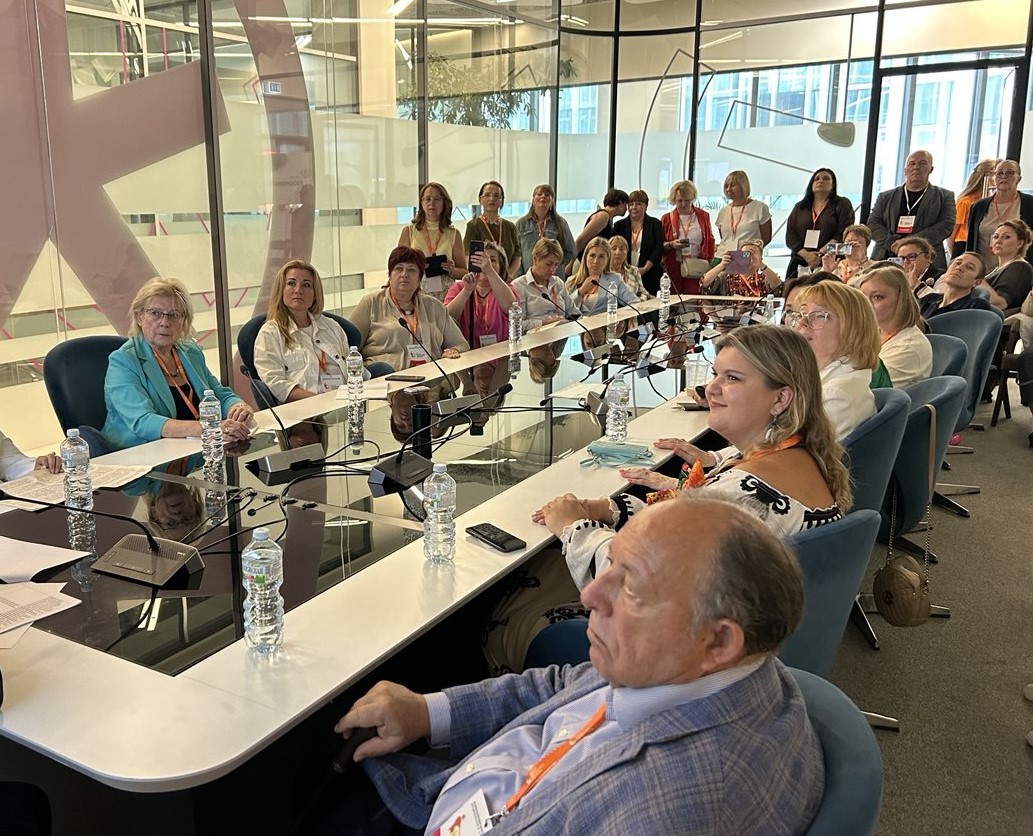
The following presentation was given by Elena V. Solovyeva, PhD in Pedagogy and Academic Director of the School No. 1306 «School of Young Politicians», a member of the UNESCO ASPnet in the Russian Federation. Elena Solovyeva showcased practical experience demonstrating how the thoughtful use of information technologies can foster children’s creative potential. Importantly, she clarified that the goal is not to immerse children passively into digital environments, but rather to cultivate the position of an active user—one who masters technology, rather than being dominated by it.
Continuing the program, Ekaterina M. Nasonova, Projects Director at the Russian Committee of the World Organization for Early Childhood Education (OMEP) and Deputy Director for Innovative Projects at the Autonomous Non-Profit Organization for Additional Education «MIR DETSTVA», together with Yulia V. Dyachenko-Deikova, Senior Methodologist at «MIR DETSTVA» and member of the UNESCO ASPnet in the Russian Federation, presented their experience integrating digital technologies into environmental education. Using an animation studio and recycled materials, they collaborate with children to produce animated films.
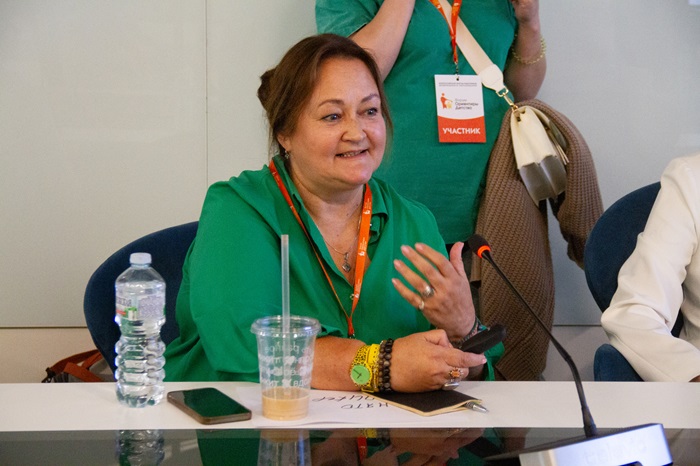
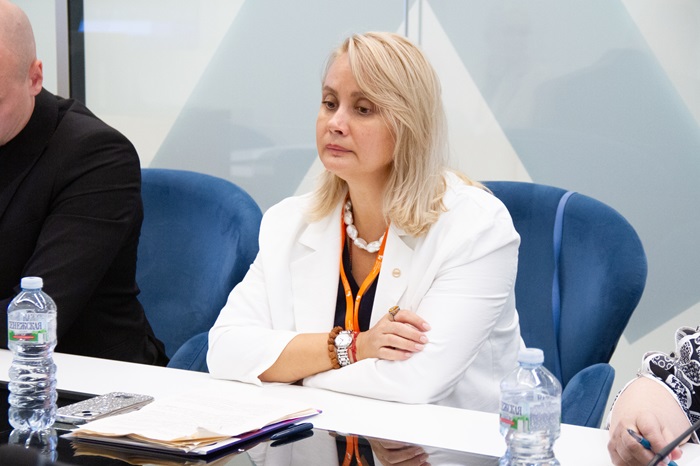
The next presentation was delivered by Elvira A. Sadretdinova, PhD in Psychology, Head of the Special (Corrective) Kindergarten for Children with Autism Spectrum Disorder (ASD) «MY VMESTE» at the Kazan Federal University (KFU) and part of the UNESCO ASPnet in the Russian Federation. She shared insights into truly unique and highly in-demand work with children with ASD, leveraging digital technologies.
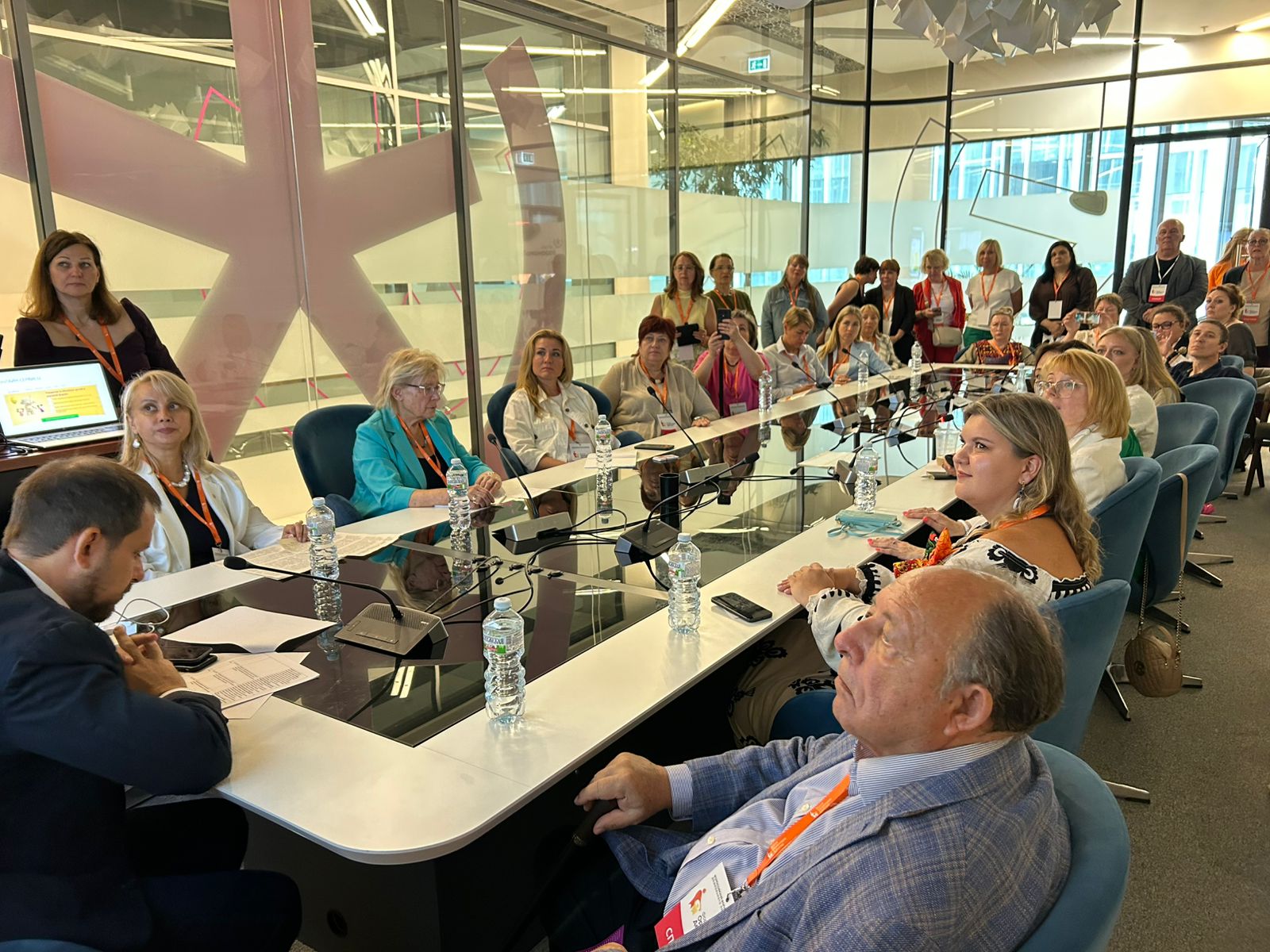
The baton for presenting practical experience in utilizing digital devices within early childhood education was then passed to Matrena V. Permyakova, Music Instructor at the Municipal Budget Preschool Educational Institution «Smile» Central District Kindergarten named after P.I. Borisova in Churapcha village, Republic of Sakha (Yakutia), and member of the UNESCO ASPnet in the Russian Federation. Matrena Permyakova shared her experience applying digital tools in music education.
At the conclusion of the symposium, two video presentations were shown.
The first was delivered by Cândido Alberto da Costa Gomes, PhD, Professor of Education, and Director of the Research, Innovation and Development Center at the Higher Institute of Education (FAFE) in Portugal; Founder and Honorary Member of the UNESCO Chair on Education, Youth and Society. He presented his report on the impact of social media and the internet on children and adolescents in Brazil. The study, conducted jointly with Alexander N. Veraksa, has yielded intriguing preliminary findings. According to Cândido Alberto, the internet functions as an implicit agent of education, beginning during formal schooling and continuing throughout adolescence, both at school and at home. However, the overuse of social media paradoxically leads to their diminishing utility, thereby increasing internet dependency.
Continuing the international dialogue on children’s digital development, A. Sabu John, Professor and Associate Professor in the Department of Psychology at Christ University, Bangalore (India), contributed his perspectives. He shared key ideas, practices, and reflections on fostering digital well-being among children — particularly through school counseling and collaboration with teachers — drawing on both global literature and India’s own experience.

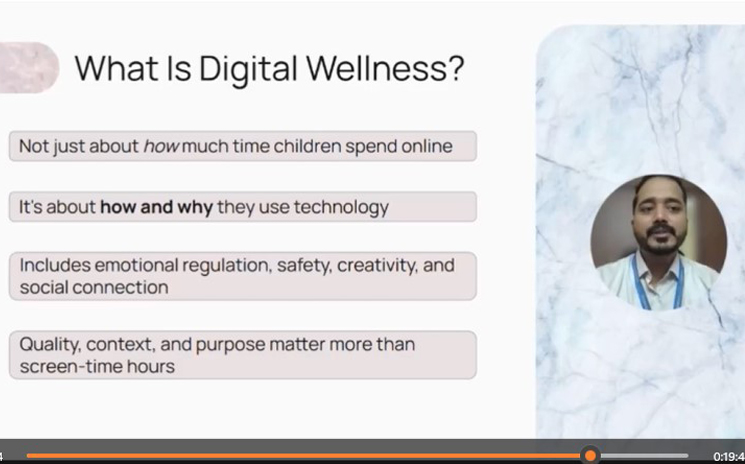
In his presentation, A. Sabu John raised critical concerns regarding the negative consequences of excessive digital technology use, such as sleep disruption, mood swings, reduced attention spans, and even diminished empathy in children and adolescents. In response, he proposed a comprehensive framework for promoting children’s digital well-being, specifically designed to mitigate these risks.
Following the formal conclusion of the symposium, participants engaged in prolonged, animated discussions on the topics presented, exchanging opinions and ideas. Conversations continued informally, with educators and specialists exchanging contact information to foster future collaboration. This created an atmosphere of unity and mutual support, facilitating the establishment of professional connections and joint initiatives in the field of education.
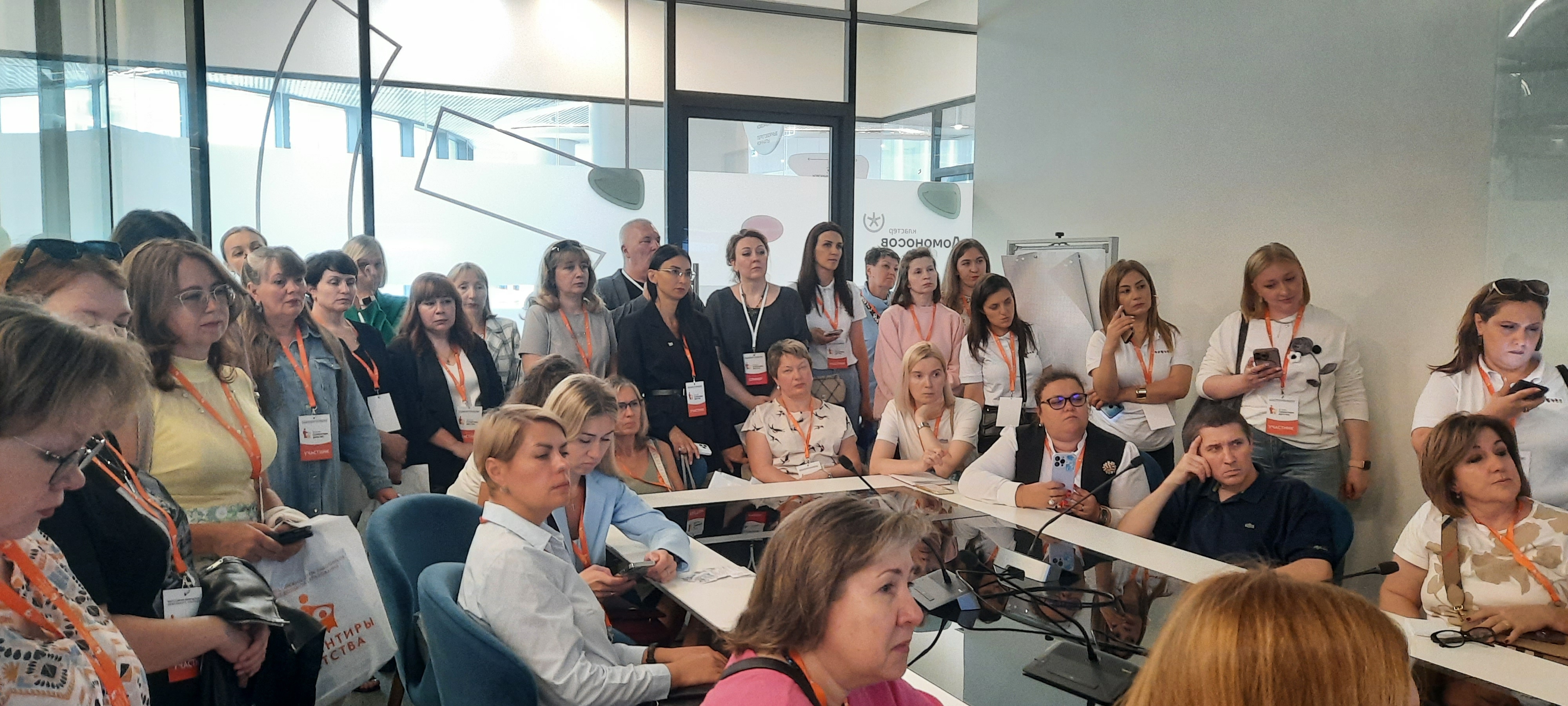
The participating UNESCO Chairs expressed a strong desire to continue the dialogue and to collaborate on projects aimed at enhancing the educational process in the digital era.
The symposium marked a significant step toward building a safer and more effective educational environment in the digital age, promoting the exchange of knowledge and best practices among educators and specialists in early childhood education, and advancing interdisciplinary dialogue on the effective use of digital technologies in this vital domain.