
The roundtable was moderated by Marina Krivenkaya, Program Coordinator of the UNESCO Chair "International (Multicultural) Education and Integration of Migrants," who noted the importance of discussing native languages and their preservation from early childhood. She emphasized that the roundtable brought together specialists from various fields who would share their experiences and knowledge.
The event was attended by representatives from partner organizations from various countries, including the Republic of Belarus. The roundtable was the result of cooperation with the International Pedagogical Society for the Support of the Russian Language and the Eurasian Association of Pedagogical Universities, as well as within the framework of networking with the UNESCO Chair "Issues of Education and Development of Young Children" of the International Pedagogical Academy of Preschool Education (IPAPE).
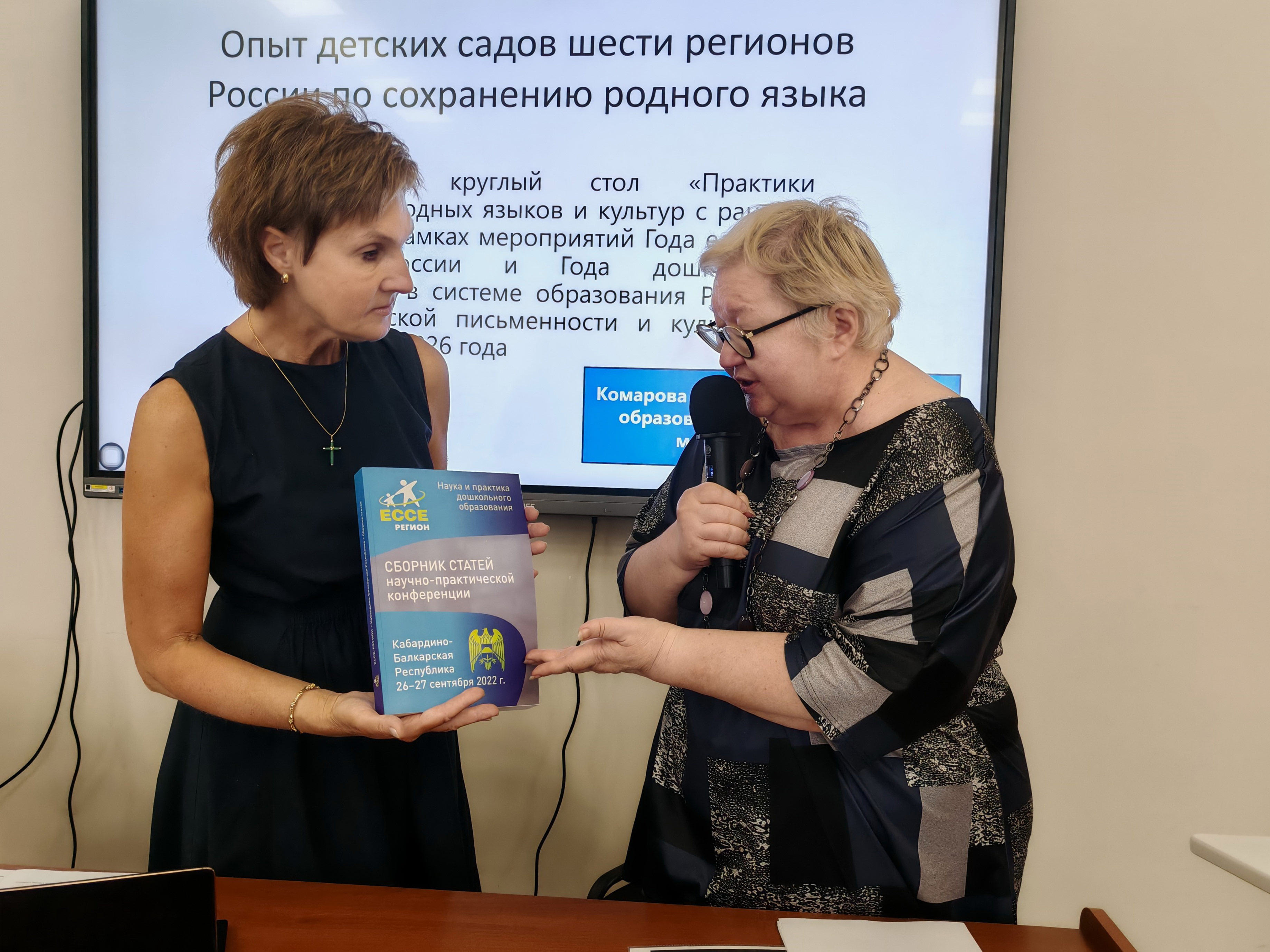
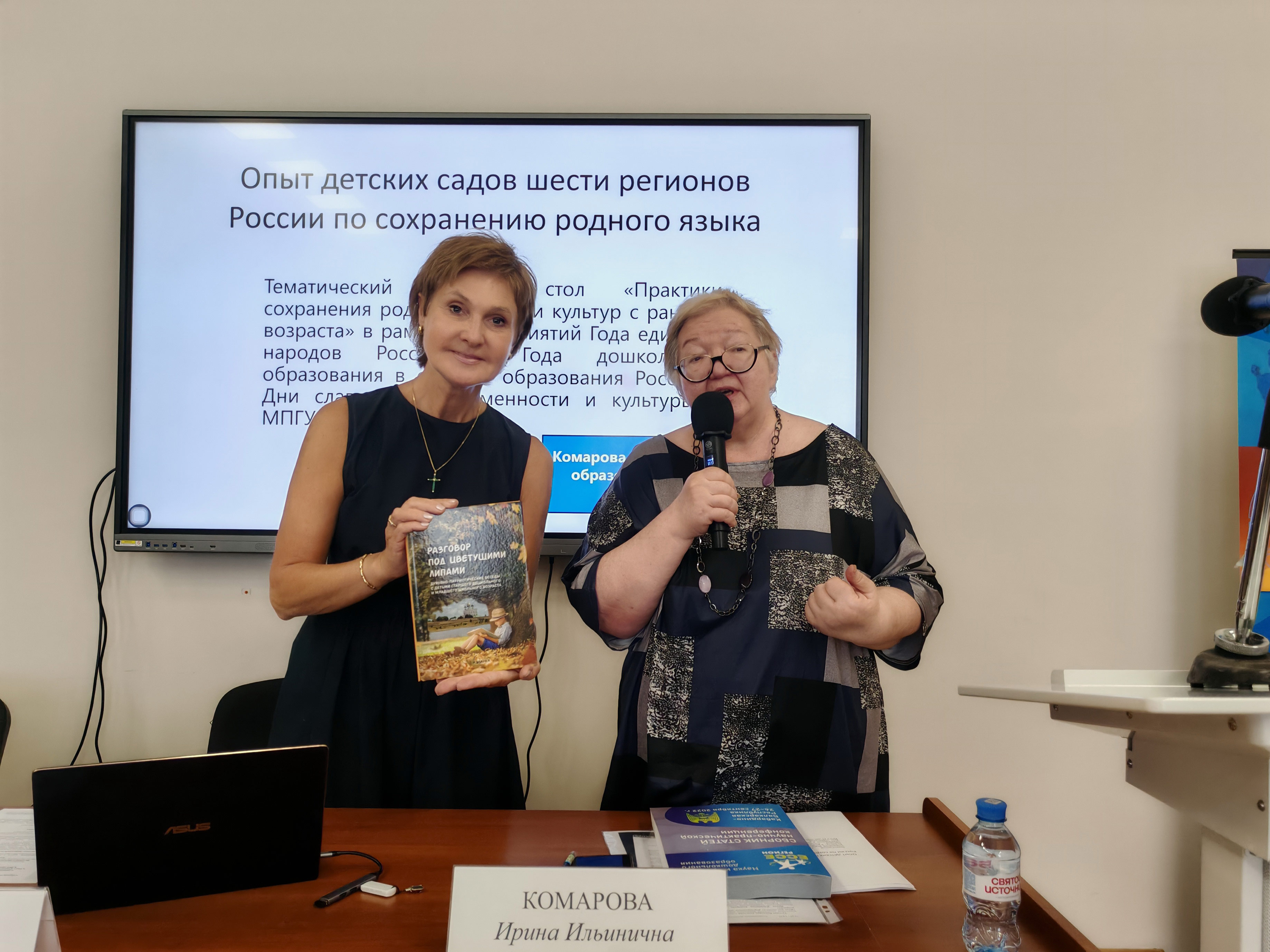
The participants' presentations covered a wide range of topics. Tatyana Abdulova, Associate Professor of the Department of Developmental Psychology, examined language as a means of forming civic identity in preschool age.
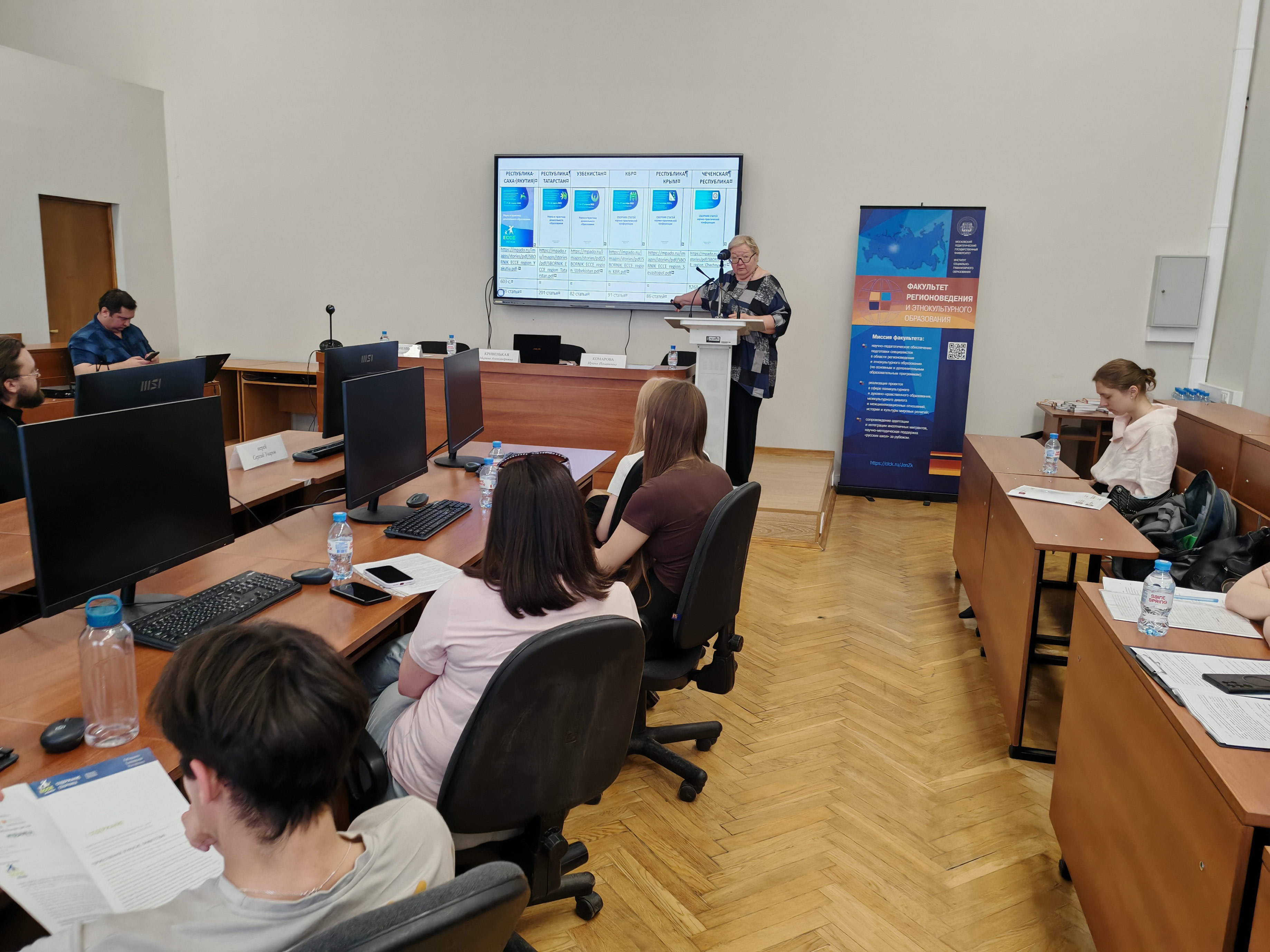
A staff member of the UNESCO Chair on Early Childhood Education and Development, Vice-Rector for Science at IPAPE Irina Komarova, shared research and practical experience from kindergartens in 12 regions of Russia and the Republic of Uzbekistan in the field of native language preservation.
Irina Minaeva, a teacher at the School of Natural Voice and a master's student at the institute, presented the topic of introducing preschool children to Russian cultural heritage through the cultivation of song culture. She began her speech with words from V.A. Sukhomlinsky: "Children should live in a world of music, in a world of beauty, play, fairy tales, music, drawing, fantasy, and creativity." Irina Minaeva noted that the modern form of speech development through choral singing is gradually disappearing, giving way to less substantive forms. She emphasized the importance of choral singing for uniting children and fostering patriotism.
Olga Romanova, Director of School No. 1354, shared her experience of holding a Russian Language Festival in kindergarten. She noted that this event creates a special speech environment where every child can feel successful. The festival includes various forms of work, such as "Visiting a Fairy Tale" and "Festival of Riddles and Proverbs," which help maintain children's interest and engagement.
One of the highlights of the festival is when a child presents their own little book and tells their own fairy tale, inspired by the pictures. Teachers actively support children with guiding questions, allowing them to develop their imagination and creative abilities.
Also speaking was Sergey Uvarov, Master of Theology, spiritual guardian of the Lyceum of Spiritual Culture named after St. Seraphim of Sarov, and cleric of the Church of the Kazan Epiphany Icon of the Mother of God in Izmailovo, who spoke about the role of Church Slavonic in shaping cultural identity.
In addition, representatives from Chuvash State Pedagogical University and School No. 2097 presented interesting practices that could be useful for integration into educational programs.
The roundtable became an important platform for exchanging experiences and developing recommendations for preserving native languages and cultures, which is especially relevant in today's multinational society.