
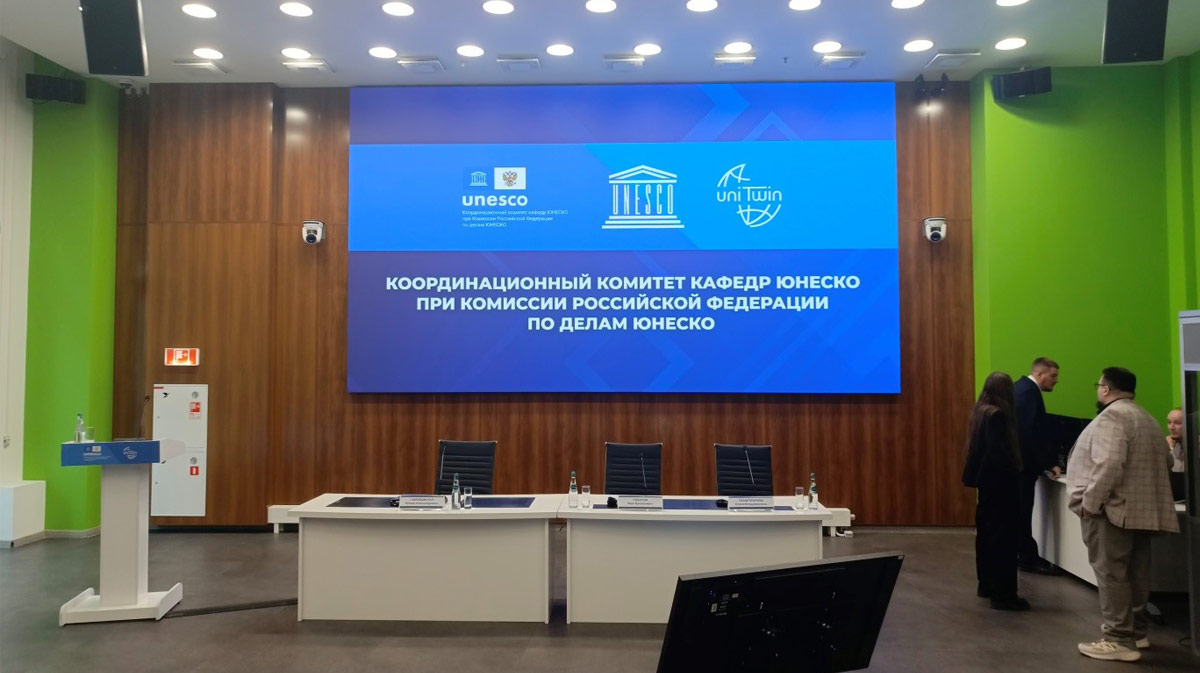
The event was moderated by Ksenia A. Gaverdovskaya, Senior Advisor to the Secretariat of the Commission of the Russian Federation for UNESCO, Ministry of Foreign Affairs of the Russian Federation.
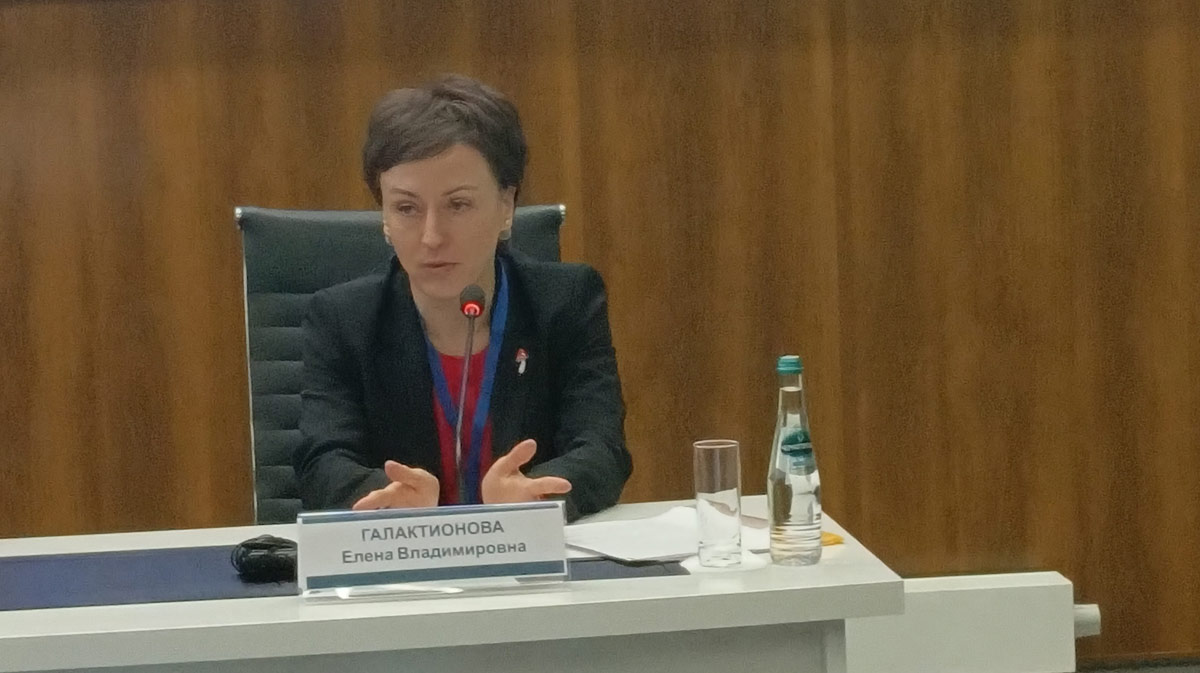
An address was delivered by Elena V. Galaktionova, Director of the Department for Multilateral Humanitarian Cooperation and Cultural Relations, who noted that we have gathered today to sum up the results of the past year and outline plans for the future. The family of UNESCO Chairs has grown with the addition of three new members. A UNESCO Chair on "Socio-Economic Models of Biosphere Reserves" was opened at the Plekhanov Russian University of Economics; the second Chair, on "Geoparks and Territories of Sustainable Development," was opened at the Ufa University of Science and Technology.
The emergence of new participants in this network is the result of many years of systematic work by the universities, as well as the organizing committee, our mediation, and, to some extent, the Commission.
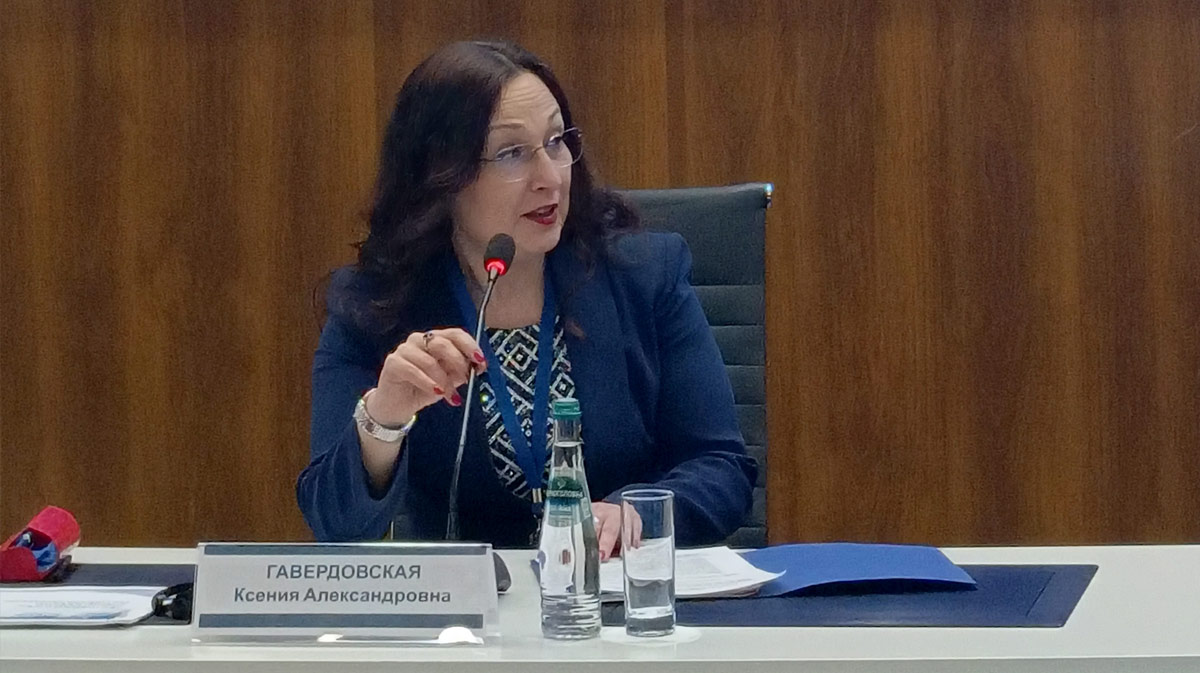
In 2025, 18 Chair agreements were renewed. Last week, we received notification from the Secretariat about the renewal of five more agreements. This cannot but please us.
Ivan V. Lobanov, Chairman of the Coordinating Committee, purposefully worked on the possibility of such a meeting.
It is indeed very important and will enable colleagues from the education sector to dwell in detail on the requirements for reports and the mandatory criteria that must be met. Accordingly, we expect that all changes will positively impact the work of the entire Chair network. This will depend on the Chairs themselves, as well as on the timely submission of information about upcoming events, initiatives undertaken, educational courses, and publications. I urge everyone to pay more attention to interaction with the coordinators of your Chairs' work at Headquarters, as well as active participation in the seminars conducted by the UNITWIN division. This is the key to each expert in their field being able to transform from a passive participant into a lead speaker at such meetings, and to use these meetings to disseminate their unique experience at the international level. For its part, the National Commission of the Russian Federation for UNESCO is also ready to provide assistance in this
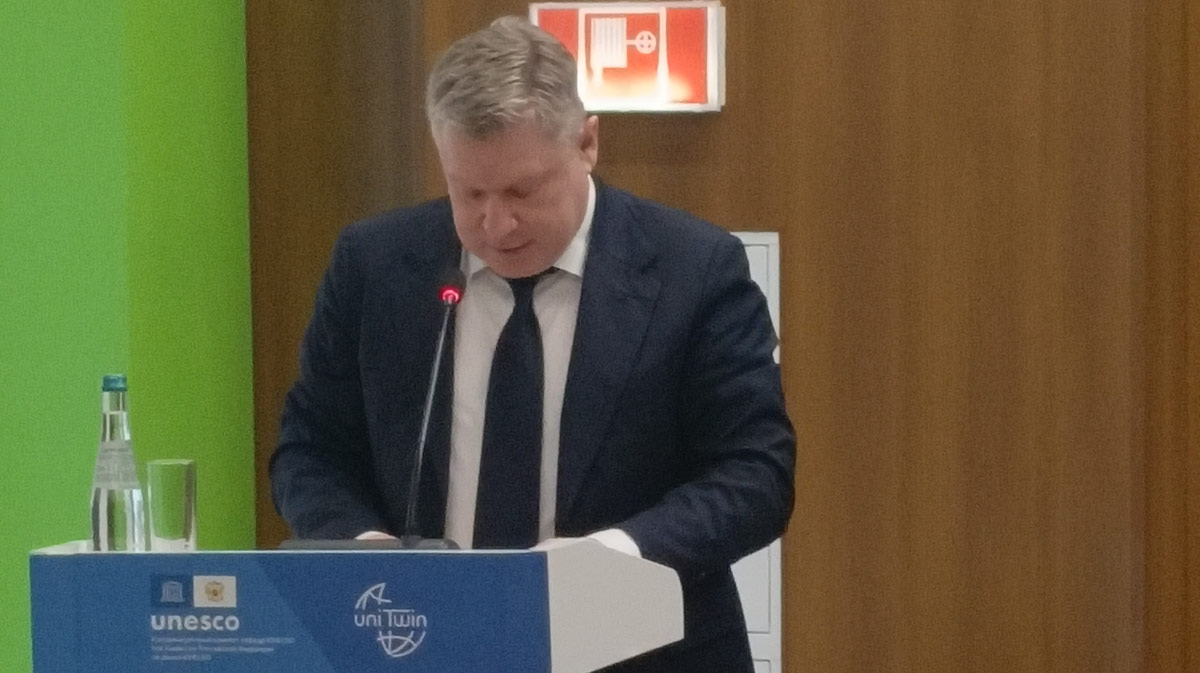
Ivan V. Lobanov, Chairman of the Coordinating Committee of UNESCO Chairs in Russian Higher Education Institutions, Rector of the Plekhanov Russian University of Economics (PRUE), in his welcoming speech said:
Dear colleagues, dear heads of the department of the Secretariat of UNESCO Headquarters, with whom we will communicate online today. Mr. Sobhi Tawil, Ms. Inga Minasyan, Mr. Moya Franz, respected heads and staff members of the UNESCO Commission of the Russian Federation.
Today's meeting is not just a working event for the heads of the UNITWIN Chairs in Russia. It is a strategic point of consolidation for the Russian network of UNESCO Chairs in the context of the transformation of the global educational and scientific system.
We are at a point of transition from the stage of coordination to the stage of strategic interaction. The Russian network of UNESCO Chairs should act not only as a participant in international processes, but also as a co-author of the solutions being formulated.
Ivan Vasilievich also noted that within the framework of the UNITWIN program, two working meetings were held with representatives of UNESCO Headquarters in Paris. The first took place in September last year during Digital Learning Week.
This meeting significantly contributed to strengthening direct working ties between us. In January 2026, another meeting took place at Headquarters, where not only were the previously reached agreements confirmed, but practical steps towards rapprochement and establishing cooperation were already outlined.
As a result of this work, sustainable direct communication channels with Headquarters in Paris have been established, which seems to me to be important. Mechanisms for supporting Russian Chairs have been agreed upon, formats for expert participation of representatives of the Russian Federation in the Organization's analytical and project initiatives have been defined, and regular interaction with the UNESCO Secretariat on issues of network development has been institutionalized. A national club of experts is also being formed to participate in the analytical and expert work of networks in relevant subject areas.
At the first stage, 38 specialists from 21 universities, on whose basis UNESCO Chairs operate, were presented to UNESCO Headquarters. It is planned that these experts will be actively involved in UNESCO's activities, covering digital transformation, artificial intelligence, sustainable development, ensuring Russia's systematic and concrete contribution to global initiatives. In addition, the issue of involving experts in international scientific and educational forums, conferences, and symposia is being actively discussed.
During the January meeting with Mr. Sobhi Tawil, the issue of sending interns from Russian universities to UNESCO Headquarters was also discussed. Currently, active work is underway to develop this initiative, which will allow young specialists to gain experience in participating in international projects and analytical processes of the Organization.
We are even ready to partially finance the sending of young scientists to UNESCO. In the initial stages, because later we discussed that grants would be used to enable our students and our young scientists to be present and work inside the central office. The Coordinating Committee of UNESCO Chairs of the Russian Federation is a professional community uniting all Chairs operating in line with the global UNESCO agenda: education, science, culture, digital transformation, humanitarian cooperation, and sustainable development.
The Committee operates under the auspices of the Commission of the Russian Federation for UNESCO, which ensures the institutional connection of the Russian network with the international system of organizations. Today, the Committee performs three key functions.
First, strategic coordination within the country, ensuring coherence of Chair actions, improving the quality of applications, supporting mandate renewals, and forming uniform standards of activity.
Second, establishing cooperation at the working level with the relevant sectors responsible for educational policy, digital transformation, artificial intelligence, natural sciences and sustainable development of humans and the biosphere, as well as with the unit coordinating the implementation program.
Third, forming a consolidated expert position of the Russian Federation. Today, our task is to create mechanisms for including Russian representatives in international consultations, expert ideologies, and project initiatives, and to increase the visibility of our network's work.
Thus, the Coordinating Council acts not only as an internal coordination body, but also as a key instrument of systemic strategic communication between Russian universities, Headquarters, and Chairs around the world. As Chairman of the Coordinating Committee, I have taken responsibility for creating a separate website dedicated to the activities of Russian Chairs and their best practices in international cooperation.
In parallel, within the framework of network development, the Fifth All-Russian Congress of UNESCO Chairs recommended launching the work of thematic clusters of the Russian UNITWIN Network. The following clusters have been initially defined:
1. «Campus Africa»,
2. «Man and the Biosphere»
3. «World Cultural and Natural Heritage»,
4. «International Decade of Indigenous Languages»,
5. «International Decade of Sciences for Sustainable Development»,
6. «Inclusive Education»,
7. «Education in the Field of Culture and Arts»,
8. «International Dialogue of Civilizations and Intercultural Education»,
9. «Issues of Artificial Intelligence Use».
Preparation of brief reports on held events, publications, and educational courses. Formation of a quarterly news digest in Russian, English, and French. Also, one can join one or several clusters depending on the topic of interest, presenting information in three languages. The digest will be sent on behalf of the Committee to UNESCO Headquarters, to the unit supervising the program, as well as to coordinators of relevant areas.
This approach will increase the visibility of the work of Russian Chairs, ensure constant communication with Headquarters coordinators, systematize information for the four-year Chair activity report, and integrate the work of Russian Chairs into international academic expert initiatives.
Thus, the Chairs will contribute to the formation of expert potential, as well as create a systemic infrastructure for permanent participation in the global educational agenda, integration into international academic networks, and the formation of practical solutions for the future of learning. Of particular importance for all of us is the preparation for the thirty-fifth anniversary of the program as an opportunity to strengthen the position of the Russian academic school in the global architecture of cooperation.
The upcoming anniversary of the program is a strategic point of growth — it is an opportunity to present Russian practices, strengthen the international vision of the network, initiate new international projects, and demonstrate the contribution of the Russian academic school to the global educational agenda. I urge everyone to take an active part in preparing for this important date. In conclusion, I would like to emphasize once again that the activity of a UNESCO Chair is an intellectual bridge between Russia and the world academic community.
It depends on us whether this bridge will be strong, modern, and strategically significant. I am confident that through joint efforts we will not only strengthen Russia's position in the global educational space but also make a significant contribution to shaping the educational, scientific, and humanitarian agenda of the 21st century. I thank all colleagues for their professionalism, active work, and readiness for the further development of our esteemed network.
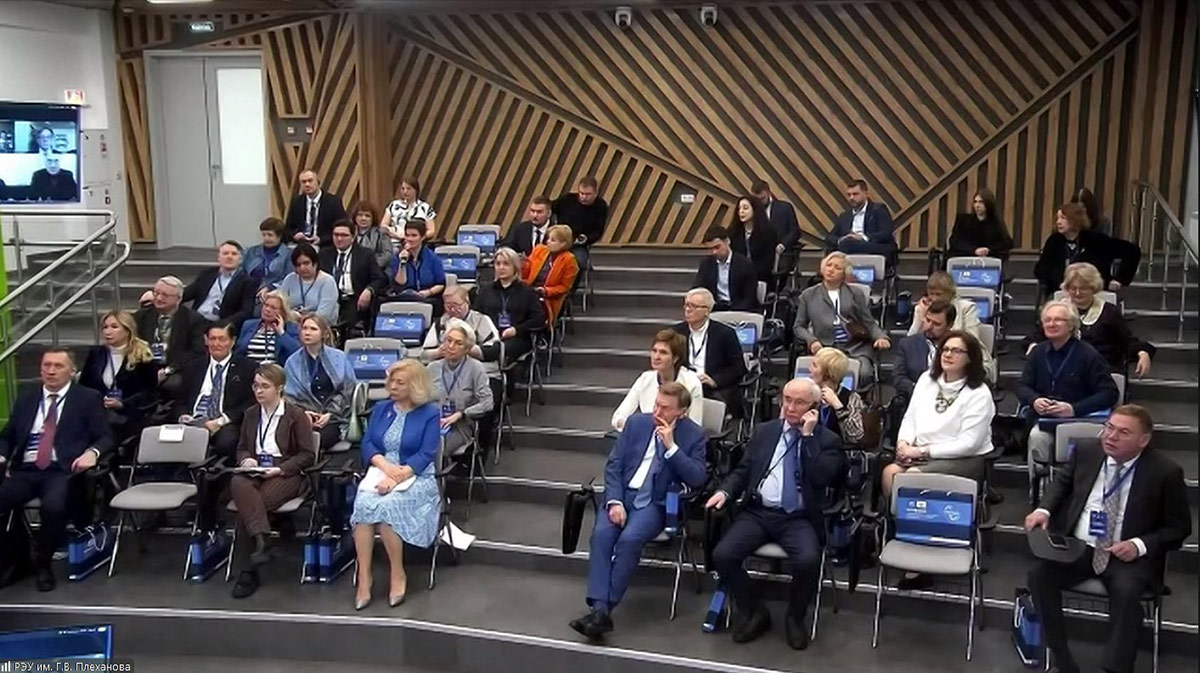
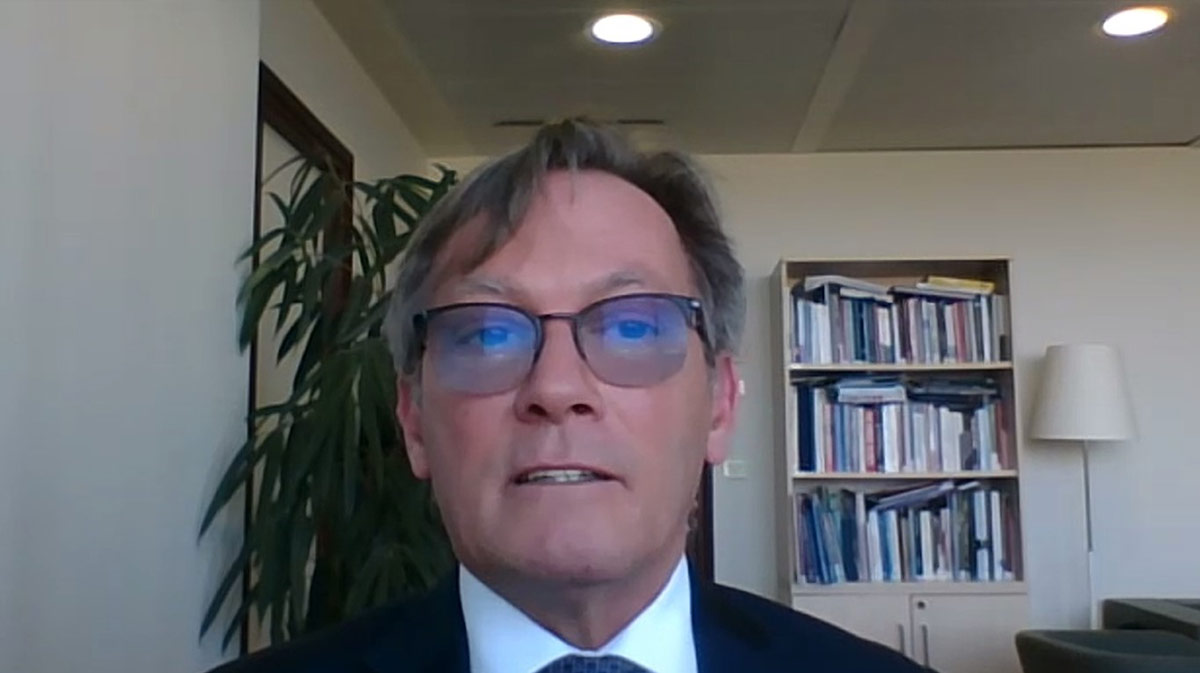
Having warmly welcomed the Forum participants, Sobhi Tawil, Director of the Division for the Future of Education and Innovation, Education Sector, focused on important practical actions for Chairs to establish network interaction with the academic community in the field of inter-university cooperation on key issues of interaction.
Subsequently, the representative of Headquarters proposed a model of interaction in which the proposals from the Russian side received further development.
The Forum's Organizing Committee carried out extensive work in summarizing the activities of the UNESCO Chairs; a report on them was presented by K.A. Gaverdovskaya.
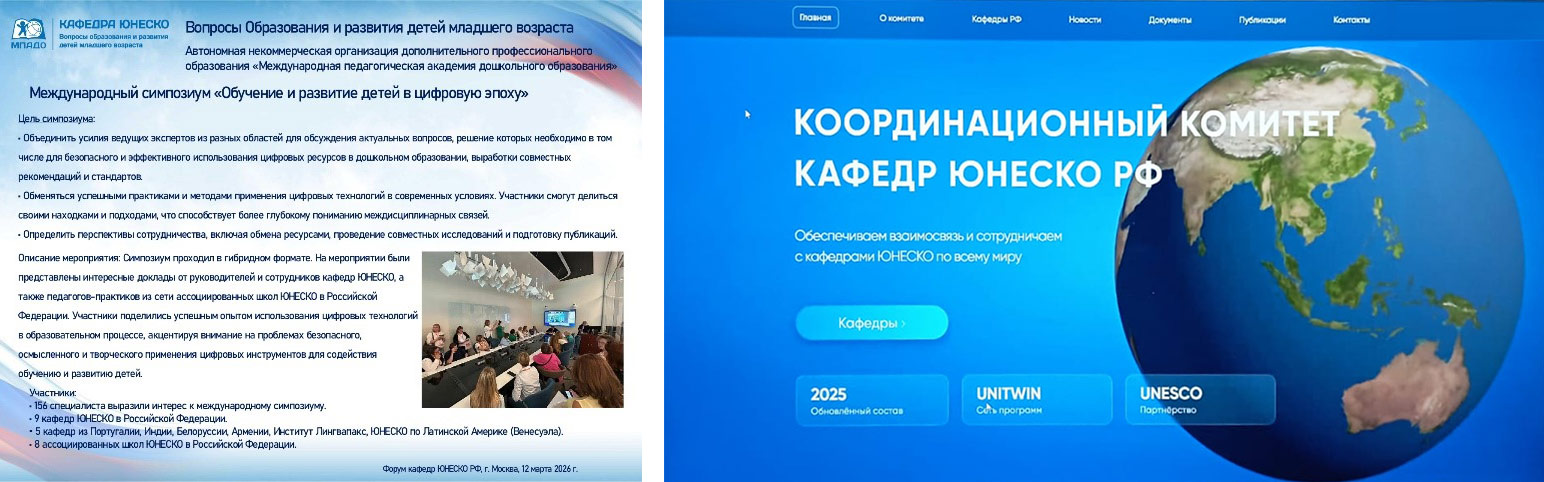
In conclusion, the Forum's Organizing Committee presented the unified website of UNESCO Chairs of the Russian Federation. Materials on the work of the Chairs for the year 2025 will be presented on the website.